Effective treatments with guaranteed relief

Japanese Beetle

Japanese beetles are a persistent pest problem for homeowners in Maine, especially in the warmer months. These destructive insects feed on over 300 different plants, causing damage to your lawn, garden, and ornamental trees. Understanding how to identify and manage them is crucial to protecting your property from their harmful effects. In this comprehensive guide, we will discuss how to identify, treat, and prevent infestations to keep your yard healthy and beautiful.

uc_stacked_images_elementor_55656608_item1 uc_stacked_images_elementor_55656608_item2 uc_stacked_images_elementor_55656608_item3 uc_stacked_images_elementor_55656608_item4

119 Google reviews

Book An Inspection

20+ Years Experience

Quick Response

100-Day Warranty

Licensed and Insured

What Are Japanese Beetles?

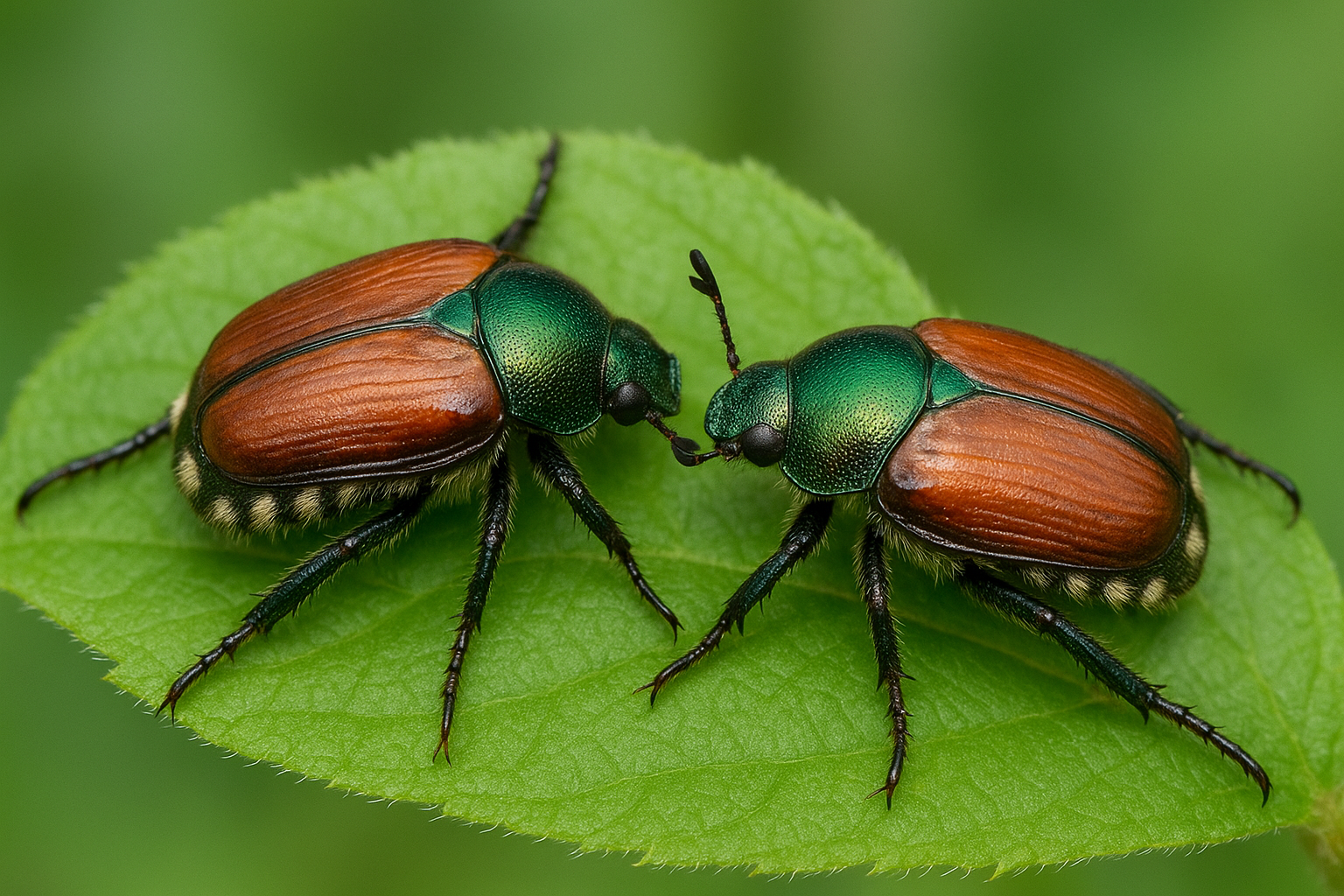
Japanese beetles (Popillia japonica) are small, metallic-green insects with copper-colored wings, known for their ability to jump long distances. These pests feed on a wide range of plants, including ornamental shrubs, flowers, and fruits, as well as your grass. Their feeding creates a characteristic “skeletonized” appearance on leaves, where the tissue between the veins is consumed, leaving only the veins behind.

These are not only a nuisance but can also cause serious damage to your plants and lawn if left unchecked. Adult beetles damage the foliage of plants, while their larvae (grubs) can weaken your lawn by feeding on its roots.

Signs of Japanese Beetles on Your Property

Spotting the signs of a Japanese beetle infestation early is key to managing the problem before it spreads further. These pests are notorious for feeding on your plants’ leaves and flowers, leaving visible signs of damage. Learn more about us!

Common Symptoms of Japanese Beetle Infestation:

  • Skeletonized Leaves: As adult beetles feed on plant leaves, they leave behind a distinct lacy pattern where the veins remain, but the rest of the leaf tissue is eaten away.
  • Wilting Plants: If you notice plants that are wilting or struggling to thrive, it may be a sign of beetle damage.
  • Adult Beetles on Your Plants: Adult beetles are usually seen in groups feeding on your plants during the summer months (usually from June to August).
  • Brown Patches on Your Lawn: If you notice thinning or browning areas on your lawn, it could be due to the grub stage of the Japanese beetle, which feeds on grass roots.
Japanese beetle.png 1

How Japanese Beetles Spread and Infest Your Yard

Japanese beetles are excellent jumpers and can easily move from plant to plant, especially when multiple beetles are present in one area. Once they find a host plant, they lay their eggs in the soil, which hatch into larvae. These larvae feed on the roots of grass and other plants, creating brown patches in the lawn.

Wildlife, such as birds, squirrels, and rodents, can also carry these pests into your yard, further increasing the risk of infestation.

Life Cycle:

Understanding the life cycle of Japanese beetles is essential for managing and controlling infestations. Their life cycle includes four stages:

Eggs: Adult beetles lay eggs in the soil of your yard.
Larvae: The eggs hatch into larvae (grubs) that feed on the roots of grass and other plants.
Pupae: After feeding, the larvae transform into pupae in the soil.
Adults: The adult beetles emerge from the soil, find plants to feed on, and the cycle repeats.

How to Get Rid of Japanese Beetles

Once you’ve identified an infestation, it’s time to take action. Managing Japanese beetles requires a multi-step approach that targets both the adult beetles and their larvae. Here are the steps to control effectively:

Treat Your Plants:

  • Insecticidal Treatment: Apply treatment using products formulated to eliminate Japanese beetles on contact. Follow the product guidelines carefully to ensure it works effectively while keeping your plants safe.
  • Neem Oil Treatment: Apply neem oil, a natural option that disrupts the beetles’ ability to feed and reproduce. This helps manage activity while remaining gentle on plants and the environment.
  • Beneficial Insects: Introduce helpful insects, such as nematodes or parasitic wasps, to target Japanese beetle larvae in the soil. This natural method helps reduce future beetle populations before they mature.

Treat Your Lawn:

  • Grub Control: Since Japanese beetles’ larvae (grubs) feed on grass roots, applying grub control treatments in early summer can help prevent their development.
  • Aerating Your Lawn: Aerating your lawn regularly helps improve soil health and reduces the likelihood of grub infestations.

Treat Your Yard:

  • Traps: While beetle traps can be effective, be cautious when using them, as they can attract more beetles into your yard if not placed strategically.
  • Lawn Care: Keep your lawn healthy by mowing regularly and watering deeply to reduce the damage from grubs and adult beetles.

Preventing Japanese Beetles in Maine

Prevention is key to reducing the risk of a Japanese beetle infestation in your home and yard. Although these pests are most active during the warmer months, they can remain a problem year-round. Here are some tips to help you prevent future infestations:

1. Regular Lawn and Garden Maintenance:

Maintain a consistent lawn care routine, including aerating, properly fertilizing, and watering deeply. Healthy grass and plants are less attractive to Japanese beetles.

2. Plant Resistant Species:

Some plants are less appealing to Japanese beetles. Consider planting species like coneflowers, lavender, or geraniums, which are naturally resistant to beetles.

3. Monitor and Remove Beetles Early:

Regularly inspect your plants for signs of adult beetles and remove them manually when spotted. Early detection and removal can significantly reduce the risk of a widespread infestation.

4. Use Physical Barriers:

Consider using row covers or netting around vulnerable plants to prevent beetles from reaching them.

When to Call the Professionals

If you’ve tried at-home treatments and still find pests in your yard or on your plants, it’s time to call a professional pest control service. Canadian Pest Solutions specializes in Japanese beetle control and can help identify the source of your infestation and eliminate it effectively.

Our team provides tailored solutions to fit your property’s unique needs, ensuring a pest-free environment for your home and lawn. Contact us today to schedule a consultation and protect your yard.

maple (1)

Client testimonials

What our clients say

Pest We Control

bed bugs

Bed Bugs

boxelder bugs

Box Elder Bugs

carpenter ants

Carpenter Ants

carpenter bees

Carpenter Bees

carpet beetle

Carpet Beetle

centipede

Centipedes

cockroach

Cockroaches

earwigs

Earwigs

cat fleas

Fleas

bald faced hornets

Hornets

japanese beetle

Japanese Beetle

mice

Mice

mosquitos

Mosquitoes

moth

Moths

mud daubers

Mud Daubers

pavement ants

Pavement Ants

pharaoh ants

Pharaoh Ants

roof rats

Rats

silverfish

Silverfish

spiders

Spiders

ticks

Ticks

wasps

Wasps

yellow jackets

Yellow Jackets